 Blog
Blog
A lot of men enter midlife believing they’ve already survived the hardest part. They’ve built a career or at least kept steady work. They’ve learned how to provide, problem-solve, and carry responsibility. They’ve endured setbacks—sometimes quietly—and developed routines that keep life moving. But the second half of adulthood often introduces a different kind of pressure: slower recovery, more medical appointments, changing family roles, and the creeping realization that time, energy, and identity aren’t infinite. Continue reading “The Second Half Shift: Helping Men Navigate Aging, Emotional Pain, and Substance Use with Dignity”
National Wellness Month in August: A Reset You Can Actually Keep

August has a particular feeling to it. It’s still summer, but you can sense the shift ahead—school schedules, busier calendars, and a general return to routine. That’s one reason National Wellness Month lands in August so naturally: it arrives at a moment when many people are tired, stretched thin, and quietly aware that their current pace might not be sustainable through the rest of the year. Continue reading “National Wellness Month in August: A Reset You Can Actually Keep”
Don’t Forget – August is Overdose Awareness Month

August is recognized in many communities as Overdose Awareness Month, with a major focal point on International Overdose Awareness Day on August 31. The purpose is not only to remember and honor people who have died from overdose, but also to support those living with substance use disorder, reduce stigma, and share practical steps that prevent deaths. If you have lost someone, this month can feel heavy. If you are supporting someone at risk, it can feel urgent. If you are in recovery, it can feel both painful and motivating. All of those reactions are valid, and none of them have to be handled alone. Continue reading “Don’t Forget – August is Overdose Awareness Month”
Using Data to Rebuild Health and Hope: Why the 2025 NSDUH Release Matters

There are some public health crises so large that people begin to speak about them in statistics before they speak about them in human terms. Substance use. Addiction. Mental illness. Suicide. Overdose. These words appear in reports, policy briefings, funding debates, and campaign speeches so often that it can be easy to forget what they really describe: lives interrupted, families strained, communities grieving, and millions of people trying to navigate pain, instability, or illness without enough support.
That is what makes the release of the 2025 National Survey on Drug Use and Health, or NSDUH, so important. It is not just another federal publication. It is a national snapshot of suffering, need, and possibility. It offers something the country cannot afford to do without: a clearer understanding of how substance use and mental health challenges are affecting Americans, and how that knowledge can be used to guide recovery.
SAMHSA’s message in releasing the survey is both practical and urgent. If the nation wants better outcomes, it must make decisions based on evidence. Good intentions are not enough. Concern is not enough. Even major spending is not enough if it is not directed wisely. To respond to substance use and mental health crises at the scale they demand, the country needs current, credible information about what people are experiencing, where needs are greatest, and how those needs are changing over time.
The need for that clarity could hardly be more obvious. Over the last two decades, more than 1.5 million lives have been lost to drug overdose and suicide. That figure alone should stop any reader in their tracks. It is not just a measure of mortality. It is a measure of national loss on a profound scale. Behind those deaths are parents, children, siblings, coworkers, classmates, neighbors, and friends. Behind them are years of grief that extend outward through families and communities. And beyond those deaths, many millions more Americans have lived with mental illness, addiction, or both, carrying the health, social, and economic burdens that so often come with them.
This is why national data matters. In a crisis this broad, no one community’s experience tells the whole story. A single neighborhood may see rising overdoses. A school district may observe worsening youth mental health. A hospital may experience strain in emergency services. A rural county may face treatment shortages. An urban area may struggle with housing instability and co-occurring disorders. All of those realities matter, but none of them alone can tell the country what is happening at the national level. NSDUH helps create that broader picture. It allows policymakers, clinicians, researchers, and community leaders to look beyond isolated examples and see patterns that might otherwise remain hidden.
That kind of perspective is essential because substance use and mental health challenges do not stay still. They evolve. Risk factors shift with economic conditions, family stress, trauma exposure, social isolation, access to care, and changes in the drug supply. Different age groups may experience problems differently. The needs of adolescents are not the same as those of older adults. The barriers facing a veteran may differ from those facing a college student, a parent, or a person living in a remote rural area. Public health planning that relies on stale assumptions will always fall behind. A country that wants to respond effectively has to know what is happening now, not simply what happened years ago.
In that sense, the release of NSDUH is about more than numbers. It is about direction. It helps answer some of the most important questions in behavioral health policy. How widespread are mental health and substance use challenges today? Which groups are facing the highest levels of need? How many people are receiving care, and how many are not? Where are the treatment gaps? Where should prevention efforts be strengthened? What kinds of services are needed not only to respond to crisis, but to support long-term recovery?
These are not abstract questions. They shape real decisions. They affect where funding goes. They influence how agencies design programs. They help determine whether prevention is prioritized or neglected, whether treatment capacity expands or stagnates, and whether recovery support is treated as essential or optional. Without dependable data, those decisions become guesswork. With it, they can become targeted, accountable, and far more effective.
That is one of the most significant ideas embedded in SAMHSA’s framing of the survey: data is not separate from recovery. It is part of how recovery happens. When leaders understand the scale of need more accurately, they can respond more intelligently. When systems know who is being left behind, they can start closing those gaps. When communities can identify trends early, they have a better chance of intervening before a crisis deepens. Evidence, used well, becomes a tool of prevention, treatment, and healing.
This is especially important because mental health and substance use are deeply interconnected. Too often, public discussion treats them as separate problems with separate solutions. But real life does not work that way. Many people struggle with both. Someone experiencing anxiety, depression, or trauma may turn to substances as a way to cope. Someone with a substance use disorder may also be dealing with severe psychological distress, unstable housing, unemployment, or physical illness. A person in recovery may need therapy, medication, peer support, and practical services all at once. When policymakers and providers work from data that reflects these overlapping realities, they are more likely to build systems that treat people as whole human beings rather than as isolated diagnoses.
The survey also matters because it can expose one of the most persistent failures in American behavioral healthcare: unmet need. It is one thing to know that many people are struggling. It is another to understand how many of them are going without help. Across the country, people who need care often do not receive it. Sometimes the reason is cost. Sometimes it is geography. In some places there are too few providers, too few treatment slots, or too little transportation. In other cases the barrier is stigma, fear, lack of information, or the simple exhaustion that can come with living in crisis. For some, services exist on paper but remain practically inaccessible. For others, care may be available for a short period but not sustained long enough to support lasting recovery.
This is why measuring treatment gaps matters so much. It pushes the conversation beyond whether programs exist and toward whether they are actually reachable. A nation can claim to have behavioral health infrastructure, but if people cannot afford it, get to it, or stay connected to it, then the gap between policy and reality remains wide. Data helps reveal that gap. It makes it harder to confuse formal availability with meaningful access.
There is also an important prevention lesson in all of this. Public attention often peaks after a death, an overdose cluster, or a visible community emergency. But recovery on a national scale cannot depend only on reacting after the worst has happened. It must include prevention that starts earlier and reaches farther upstream. That means understanding when risk begins, which groups may be most vulnerable, and what protective factors matter. It means supporting schools, families, neighborhoods, and healthcare settings in ways that reduce the likelihood of crisis in the first place. Surveys like NSDUH can help guide that work by identifying patterns that suggest where prevention investments are most needed.
The phrase “great American recovery” carries weight because it suggests something larger than emergency intervention. Recovery, in this context, is not just about getting through a bad moment. It is about restoring people’s ability to live stable, connected, healthy lives. For one person, that may mean sustained treatment and a return to work. For another, it may mean managing depression, rebuilding family trust, and finding housing. For another, it may mean surviving an overdose, entering treatment, and having access to support that continues after discharge. For a community, recovery might look like fewer deaths, more accessible services, stronger local partnerships, and a culture that treats behavioral health with seriousness instead of stigma.
And that points to another reason the survey release matters: it reinforces the idea that behavioral health is not a side issue. It is central to the nation’s wellbeing. Mental illness and addiction affect the workforce, schools, emergency rooms, child welfare systems, criminal justice systems, and local economies. They shape whether families remain stable, whether children are able to learn, whether people can keep jobs, and whether communities can thrive. When substance use and mental health are treated as peripheral concerns, policy remains fragmented. When they are treated as foundational concerns, it becomes easier to build coordinated responses that match the scale of the challenge.
This is where data becomes not only informative, but democratic. In a polarized society, facts do not solve every argument, but they provide a common starting point. They allow the country to discuss difficult issues on firmer ground. They make it harder to minimize the crisis, deny its reach, or reduce it to slogans. They challenge both complacency and oversimplification. They remind leaders that behind every ideological dispute there are real people whose outcomes depend on whether public systems work.
At the same time, data must never be mistaken for action itself. A survey can illuminate a problem, but it cannot fix it. It can identify disparities, but it cannot close them alone. It can show where the treatment gaps are, but it cannot hire clinicians, expand services, or reduce stigma by itself. That still requires leadership.
Read more at https://www.samhsa.gov/blog/release-2025-nsduh-using-data-to-drive-great-american-recovery
Public Notice
PUBLIC NOTICE: Ness Healthcare announces its intent to apply to the Louisiana Housing Corporation for FY 2025 Emergency Solutions Grants Program funds for Region IX (Livingston, St. Helena, St. Tammany, Tangipahoa, and Washington parishes). The proposed project renovates a unit into a 10-bed emergency shelter for homeless adults and provides homelessness prevention and rapid re-housing assistance across the region.
Why Bebe Moore Campbell National Minority Mental Health Awareness Month Still Matters

Every July, Bebe Moore Campbell National Minority Mental Health Awareness Month gives people across the United States a chance to focus on a difficult but essential reality: mental health does not exist separately from culture, race, history, community, or access to care.
The month is not simply a calendar observance. It is a reminder that emotional wellbeing is shaped by both personal experience and larger systems, and that many minority communities continue to face unique barriers when it comes to understanding, discussing, and treating mental health conditions. Continue reading “Why Bebe Moore Campbell National Minority Mental Health Awareness Month Still Matters”
July is National Minority Mental Health Awareness Month

July is National Minority Mental Health Awareness Month – a time to spotlight mental health in communities that have too often been overlooked, misunderstood, or underserved. It’s also a chance to acknowledge both the resilience and the real burdens carried by many people of color and other marginalized groups, and to push for practical changes that make support easier to access and more culturally responsive. While mental health challenges affect every background, the pathways into care—and the experience of being heard and helped once you get there-are not the same for everyone. Continue reading “July is National Minority Mental Health Awareness Month”
Happy 4th of July from The Ness Center!
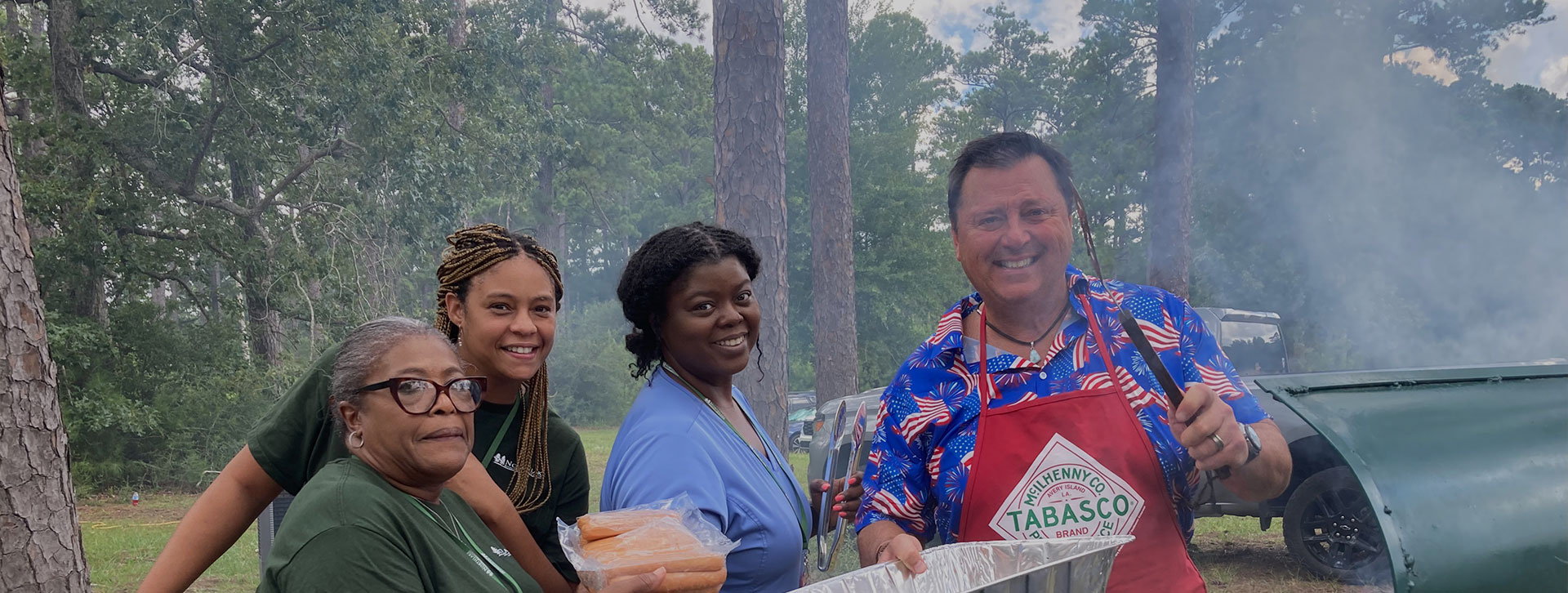
As our community celebrates our nation’s 250th birthday, we are also celebrating 10 years as a nonprofit, providing a full continuum of behavioral healthcare services to individuals and families across Southeast Louisiana and throughout the state.
We are especially honored to provide specialized services for veterans, helping those who have served our country access the care and support they deserve.
Today and every day, we extend our love and gratitude to our client veterans and to all who have served. We are proud of you, and honored to serve you.
If you or someone you know is struggling with mental health or substance use, we’re here to help. Please contact us to learn more about our programs and services:
Northlake Behavioral Health System
Phone: (985) 626-6300
Website: www.northlakebh.org
The Ness Center
Phone: (985) 334-4040
Website: www.thenesscenter.com
Help, hope, and recovery are just a phone call away. Best wishes for a safe and fun Fourth of July weekend!!
Care That Meets Families at Home: Why Teleconsultation Is Effective for Children’s Mental Health

Children’s mental health support often breaks down at the moment a family tries to access it. Parents may recognize anxiety, behavioral outbursts, sleep problems, school refusal, or persistent sadness, yet still struggle to find a provider, travel to appointments, or keep services going consistently. Even families who are highly motivated can get worn down by waitlists, scheduling conflicts, transportation issues, and the sheer complexity of coordinating care across school, pediatrics, and home life. Continue reading “Care That Meets Families at Home: Why Teleconsultation Is Effective for Children’s Mental Health”
Juneteenth: Freedom Remembered, Joy Practiced, Healing Continued

Juneteenth, celebrated on June 19, is one of the most meaningful days on the American calendar because it tells a fuller story about freedom. It marks the moment in 1865 when many enslaved Black people in Texas learned they were free, even though emancipation had been declared more than two years earlier.
That gap is not a footnote. It shapes what Juneteenth represents today, a holiday that honors liberation while acknowledging how long justice can take to reach the people who deserve it. From a positive standpoint, Juneteenth is a celebration of survival, community, and the power of Black people to create joy and meaning even in the aftermath of profound harm. It also connects naturally to mental health, because remembering, gathering, and reclaiming dignity are all part of healing. Continue reading “Juneteenth: Freedom Remembered, Joy Practiced, Healing Continued”